Programme details
What you will study
Programme Objectives
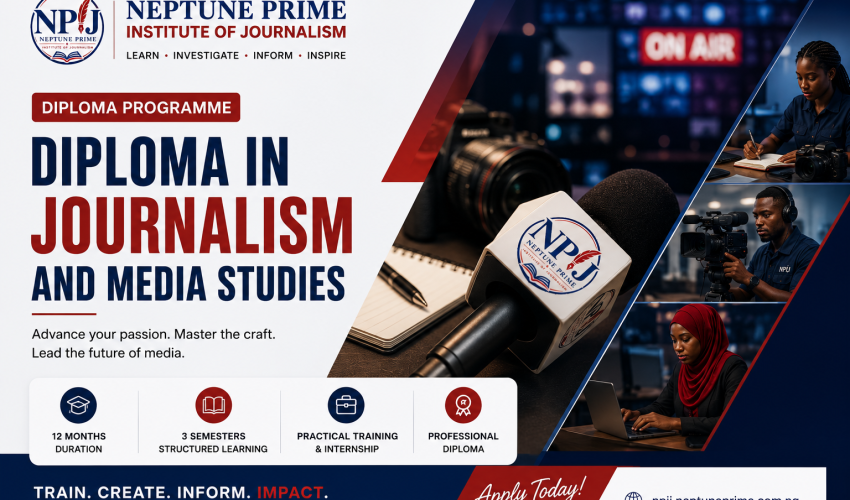
The Diploma in Journalism and Media Studies is a comprehensive twelve-month professional programme designed to develop highly competent journalists, media practitioners, communication specialists, and digital media professionals. It builds upon the foundational knowledge of journalism and advances applicants into specialist areas of media practice, investigative reporting, research, and strategic communication.
The programme combines rigorous academic instruction with extensive practical experience, preparing graduates for leadership roles within the media industry and related communication professions.
Upon successful completion of the programme, graduates will be able to:
- Demonstrate advanced knowledge of journalism, mass communication, media ethics, and communication theory.
- Apply professional reporting, investigative journalism, editorial, and multimedia production skills.
- Conduct media research and analyse communication issues affecting society.
- Produce accurate, balanced, and ethical journalism across print, broadcast, and digital platforms.
- Apply data-driven and investigative approaches to journalism.
- Demonstrate leadership, innovation, and entrepreneurship within the media industry.
- Contribute to democratic governance, development communication, and responsible public discourse.
- Pursue advanced academic or professional opportunities in journalism and communication.
Programme Structure
The Diploma programme spans twelve (12) months and consists of three academic semesters, with a supervised industry internship integrated between the second and third semesters.
Semester One
Foundations of Journalism and Media Practice
The first semester establishes a strong academic and professional foundation by introducing applicants to journalism principles, communication theory, media ethics, development communication, and language for journalism.
Students study:
- Introduction to Journalism and Media Studies
- Journalism Ethics and Media Law
- Development Communication
- English for Journalism
- Nigerian Peoples, Culture and National Unity
- Language Elective
Students who successfully complete the Institute's Certificate Programme may be admitted directly into Semester Two, subject to the Institute's admission policy.
Semester Two
Advanced Journalism Theory and Professional Practice
Students develop higher-level professional competencies through practical newsroom training and advanced media studies.
Key learning areas include:
- Advanced News Writing
- Media Management
- Digital Journalism
- Multimedia Storytelling
- Newspaper Production
- Public Relations
- Entrepreneurship
- Communication Theories
- Online Journalism
- Media Law and Ethics
Students begin preparing for professional specialisation and research.
Professional Internship
A six-week supervised internship takes place after Semester Two.
Students are placed within Neptune Prime's newsroom or approved media organisations where they gain practical experience in:
- Editorial production
- News gathering
- Reporting
- Digital publishing
- Multimedia production
- Professional newsroom operations
The internship is assessed through supervisor evaluations, reflective reports, and professional presentations.
Semester Three
Specialisation and Research
The final semester enables applicants to specialise in advanced journalism disciplines while completing an independent research project.
Areas of study include:
- Investigative Journalism
- Scientific and Data Journalism
- Media, Propaganda and Public Opinion
- Editorial Writing
- Research Methods
- Dissertation / Research Project
Students graduate with advanced analytical, investigative, and research competencies required in today's media environment.
Practical Learning Experience
The Diploma programme places significant emphasis on experiential learning through industry-based practical activities.
Students participate in:
- Newsroom simulations
- Investigative reporting exercises
- Multimedia journalism production
- Digital publishing
- Editorial workshops
- Public communication projects
- Professional newsroom placements
- Research seminars
- Industry internship
- Independent dissertation
- Media portfolio development
Throughout the programme, applicants apply classroom knowledge to real-world journalism and communication challenges.
Learning Outcomes
Upon successful completion of the programme, graduates will demonstrate competencies across knowledge, professional skills, and professional values.
Knowledge
Graduates will be able to:
- Analyse communication theories and their application in contemporary journalism.
- Evaluate media ethics, regulation, and professional standards.
- Explain investigative journalism methodologies.
- Assess the impact of digital media, misinformation, and emerging communication technologies.
- Apply development communication principles to national development.
Professional Skills
Graduates will be able to:
- Produce professional investigative reports.
- Conduct advanced interviews and source verification.
- Edit and publish multimedia journalism.
- Manage digital newsrooms and content management systems.
- Produce data-driven journalism.
- Design strategic communication campaigns.
- Conduct media research.
- Present research findings professionally.
- Develop independent media enterprises.
Professional Values
Graduates will demonstrate:
- Ethical journalism practice
- Accuracy and fairness
- Accountability
- Respect for diversity
- Conflict-sensitive reporting
- Community engagement
- Professional leadership
- Continuous learning and innovation
Career Opportunities
Graduates of the Diploma programme are prepared for professional and leadership positions across the media and communication industry.
Potential career paths include:
- Journalist
- Senior Reporter
- Investigative Journalist
- News Editor
- Broadcast Journalist
- Multimedia Producer
- Digital Media Specialist
- Online Editor
- Public Relations Manager
- Corporate Communications Officer
- Government Information Officer
- NGO Communications Specialist
- Development Communication Officer
- Media Researcher
- Editorial Writer
- Media Consultant
- Communications Manager
- Media Entrepreneur
- Content Strategist
- Journalism Lecturer (subject to further qualifications)
The Diploma also provides an excellent foundation for further academic study in journalism, mass communication, media studies, and related disciplines.
Who Should Apply?
This programme is designed for:
- Holders of the Certificate in Mass Communication and Media Practice
- Practising journalists seeking formal qualifications
- Media practitioners wishing to upgrade their professional competencies
- Communication officers
- Public relations practitioners
- Digital media professionals
- NGO communication personnel
- Government information officers
- Graduates seeking specialist journalism training
- Individuals aspiring to leadership positions within the media industry
Applicants with relevant academic qualifications or professional experience may also be considered in accordance with the Institute's admission guidelines.
Teaching Methodology
The Diploma programme adopts a research-informed, industry-focused, and learner-centred teaching philosophy.
Teaching methods include:
- Interactive lectures
- Advanced newsroom simulations
- Practical workshops
- Investigative reporting exercises
- Multimedia production laboratories
- Case study analysis
- Research seminars
- Industry mentorship
- Group projects
- Independent research
- Professional internship
- Continuous assessment
- Dissertation supervision
The programme is delivered through Physical, Hybrid, and Online learning modes, providing flexibility for both full-time applicants and working professionals.
Neptune Prime Advantage
The Diploma programme is strengthened by the extensive professional resources of Neptune Prime, one of Northern Nigeria's leading digital newspapers.
Students benefit from:
- Access to an active professional newsroom
- Mentorship by experienced journalists, editors, and media professionals
- Practical newsroom simulations based on real editorial workflows
- Opportunities for publication of outstanding applicant work
- Exposure to investigative journalism practices
- Industry-standard digital publishing platforms
- Internship placements within Neptune Prime and partner media organisations
- Networking opportunities with media practitioners across Nigeria
This industry integration ensures that graduates develop practical competencies alongside academic excellence, making them highly competitive within the media profession.
Entry Requirements
Applicants should possess one of the following:
- Certificate in Mass Communication and Media Practice from Neptune Prime Institute of Journalism; or
- A recognised Certificate in Journalism, Mass Communication, Media Studies, or a related discipline from an approved institution; or
- Other qualifications considered equivalent by the Institute.
Applicants may also be required to satisfy additional admission requirements where applicable.
Admission Requirements
Applicants are required to submit:
- Completed online application form
- Passport photograph
- Academic credentials
- Valid means of identification
- Birth certificate or declaration of age (where applicable)
- Contact information
- Supporting documents requested during admission
Admission is subject to verification of all submitted documents and compliance with the Institute's admission requirements.
How To Apply
Step 1
Complete the online application form.
Step 2
Upload all required supporting documents.
Step 3
Submit your application for review.
Step 4
The Admissions Office evaluates your application.
Step 5
Successful applicants receive an admission offer together with registration guidelines.
Step 6
Complete registration and commence your Diploma studies.
Applicants can monitor the progress of their applications through the Institute's admissions portal.
Programme Features
- Duration: 12 Months
- Study Mode: Physical, Hybrid & Online
- Award: Diploma in Journalism and Media Studies
- Credit Units: 49
- Semesters: 3
- Professional Internship: 6 Weeks
- Research Project: Dissertation Included
- Practical Training: Extensive
- Advanced Newsroom Simulations
- Investigative Journalism Training
- Data Journalism
- Multimedia Production
- Professional Portfolio Development
- Industry Mentorship
- Career Development Support
- Progression to Higher Academic and Professional Qualifications
This content is aligned with the approved Diploma curriculum, programme objectives, graduate profile, learning outcomes, and course distribution while providing prospective applicants with a concise, professional overview suitable for your public programme pages.
- 13 Sections
- 52 Weeks
- GST 111 - Nigeria's People, Culture and National Unity0
- JMS 101 - Introduction to Journalism and Media Studies0
- JMS 102 - Principles of Journalism, Media Law, Ethics and Regulation0
- JMS 103 - Fundamentals of Development Communication Media0
- JMS 104 - English for Journalism0
- LNG 101 - Language Elective I — Select one from: Arabic / French / Farsi / Chinese / Hausa0
- Advanced Journalism Theory - InternshipInternship — 6 Weeks (between Semesters 2 and 3) Students are placed in approved media organisations for a supervised professional experience. Neptune Prime's active newsroom serves as the primary internship host. Assessed via supervisor report, reflective journal, and post-internship presentation. Carries 4 credit units.0
- JMD 301 - Investigative Journalism and Accountability Reporting0
- JMD 302 - Scientific and Data Journalism0
- JMD 303 - Media, Propaganda and Public Opinion0
- JMD 304 - Editorial Writing0
- JMD 305 - Research Methods in Media and Communication Studies0
- JMD 306 - Dissertation / Research Project0
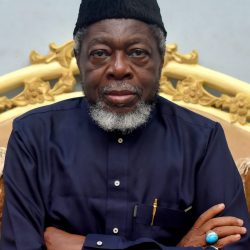
Hassan Gimba is an accomplished Nigerian journalist, author, public affairs commentator, publisher, and media entrepreneur with decades of experience in journalism and public communication. He is the Founder of Neptune Prime Institute of Journalism, an institution dedicated to developing the next generation of ethical and professional journalists and media practitioners.
Born on April 1964 in Kaduna, Nigeria, Hassan Gimba has built an outstanding career in print, digital, and broadcast journalism. He previously served as Editor of Leadership Newspaper and was also the Spokesperson to the Honourable Minister of Science and Technology, where he contributed to government communications and public engagement.
He is the Publisher and Editor-in-Chief of Neptune Prime (www.neptuneprime.com.ng), a leading Nigerian online newspaper headquartered in Abuja, as well as Neptune Prime Hausa (www.neptuneprimehausa.com). He also publishes the Neptune Prime Magazine (print edition) and owns Neptune Prime Online TV, demonstrating his commitment to quality multimedia journalism.
Beyond publishing, Hassan Gimba is a respected syndicated columnist whose articles regularly appear in Blueprint Newspaper, New Nigerian Newspaper, and several other national and international media platforms. His writings focus primarily on politics, democracy, good governance, national security, peacebuilding, and socio-economic development, with particular attention to insurgency, terrorism, and armed banditry in Northern Nigeria.
Over the course of his career, he has authored more than 1,000 articles, earning recognition for his insightful analysis, balanced reporting, and commitment to responsible journalism. His published works include The Arbiter, with two published volumes, a collection of selected articles reflecting his views on governance, leadership, public policy, and national development.
Through the Neptune Prime Institute of Journalism, Hassan Gimba continues to mentor aspiring journalists, promote media excellence, and champion ethical reporting in the digital age.
Areas of Expertise
Journalism and Media Practice
Investigative and Political Reporting
Public Affairs Commentary
Media Entrepreneurship
Digital and Online Publishing
Editorial Leadership
Public Communication
Governance and National Security Analysis
Journalism Education and Mentorship
Professional Highlights
Founder, Neptune Prime Institute of Journalism
Publisher & Editor-in-Chief, Neptune Prime
Publisher, Neptune Prime Hausa
Publisher, Neptune Prime Magazine
Owner, Neptune Prime Online TV
Former Editor, Leadership Newspaper
Former Spokesperson, Federal Ministry of Science and Technology
Author, The Arbiter (Volumes I & II)
Author of over 1,000 published articles